The flock pretends to have scrapie
Three Bags FullThe flock pretends to have scrapie as a deliberate act of deception: it turns disease knowledge into a performance that makes Gabriel abandon the pasture. The ruse is not an outbreak but a collective tactic, rehearsed in the hay barn and made convincing through the sheep’s unsteady movements.
From Disease Knowledge to a Plan
The idea takes shape amid concern about Gabriel’s sheep falling ill and passing disease to the flock. Melmoth counters that fear by asking what would happen if the flock itself appeared sick. For Cordelia, that suggestion unlocks a vocabulary she had learned from George: the names of diseases, including foot rot, meningitis, and Creutzfeld-Jakob, had once seemed mysterious, but now each name carried meaning. The flock’s growing ability to use such knowledge makes the deception possible.
A short time later, the sheep have a plan. They withdraw into the hay barn to rehearse, then emerge into daylight bemused by the terror they had managed to conjure in its dim interior. The rehearsal gives the ruse a theatrical quality, but its purpose is practical: to make Gabriel read their movements as evidence of a dangerous disease.
The Performance and Gabriel’s Reaction
The display begins after Gabriel calls to Ham about the Smartest Sheep in Glennkill contest. Ham, sweating and panting, does not turn; he wheels his chair faster through the grass and takes the path across the fields. Once Ham has gone around the bend, Gabriel is grinning, apparently satisfied that he has understood the old man. His attention then shifts to the flock.
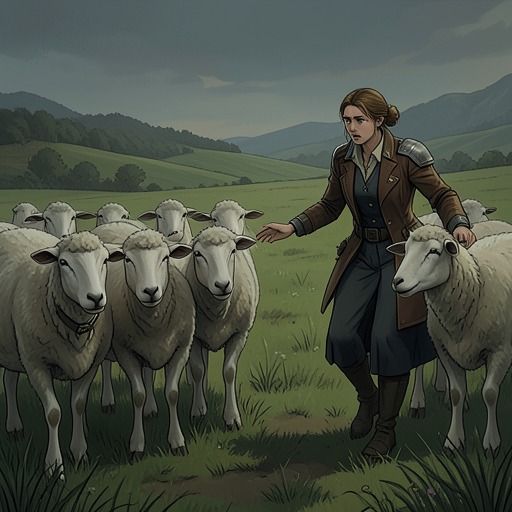
A Blackface sheep stumbles and falls, struggles back to its feet, and falls again after only a few steps. A second sheep stumbles behind it, while a fat ram rubs his head against the hay-barn wall as though possessed. The flock continues with shaky, unnaturally high-stepping movements. Gabriel first watches with a grin, but his expression changes as he recognizes the apparent symptoms: he concludes that they have scrapie and drops his scythe.
The performance works because the flock gives Gabriel visible signs to interpret, not because the animals are actually ill. They are still reeling about long after he stops watching them, and the account makes clear that they are having fun. Their feigned disorder turns his fear of disease into an immediate decision to remove his own sheep.
The Ruse’s Consequences
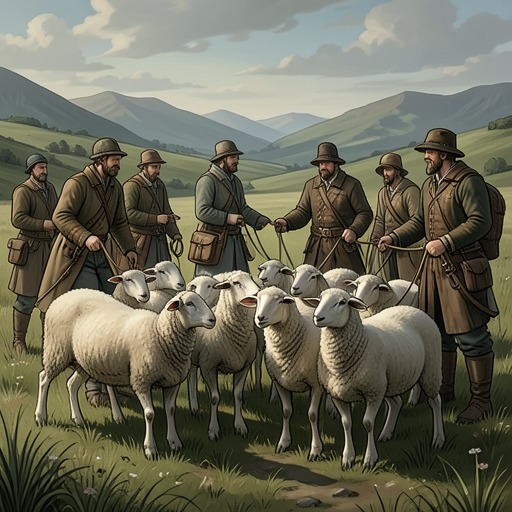
Gabriel whistles up his dogs and tears open a gap in the wire fence he had put up only days earlier. The dogs then drive his sheep out of the enclosure in orderly fashion, without panicking them. Within minutes, dust on the path and the empty, wire-fenced enclosure are the only reminders of Gabriel and his flock. By making the pasture seem unsafe, the sheep achieve what a direct confrontation might not: Gabriel clears the enclosure himself.
Heather takes the departure to mean that Gabriel will not return. Miss Maple disagrees, predicting that he will be back at noon, when the shadows are short, and expects something to come out then. The flock’s performance therefore secures an immediate reprieve, not a settled resolution. Its apparent illness has driven Gabriel away for the moment, while Miss Maple’s expectation keeps the wider problem open.